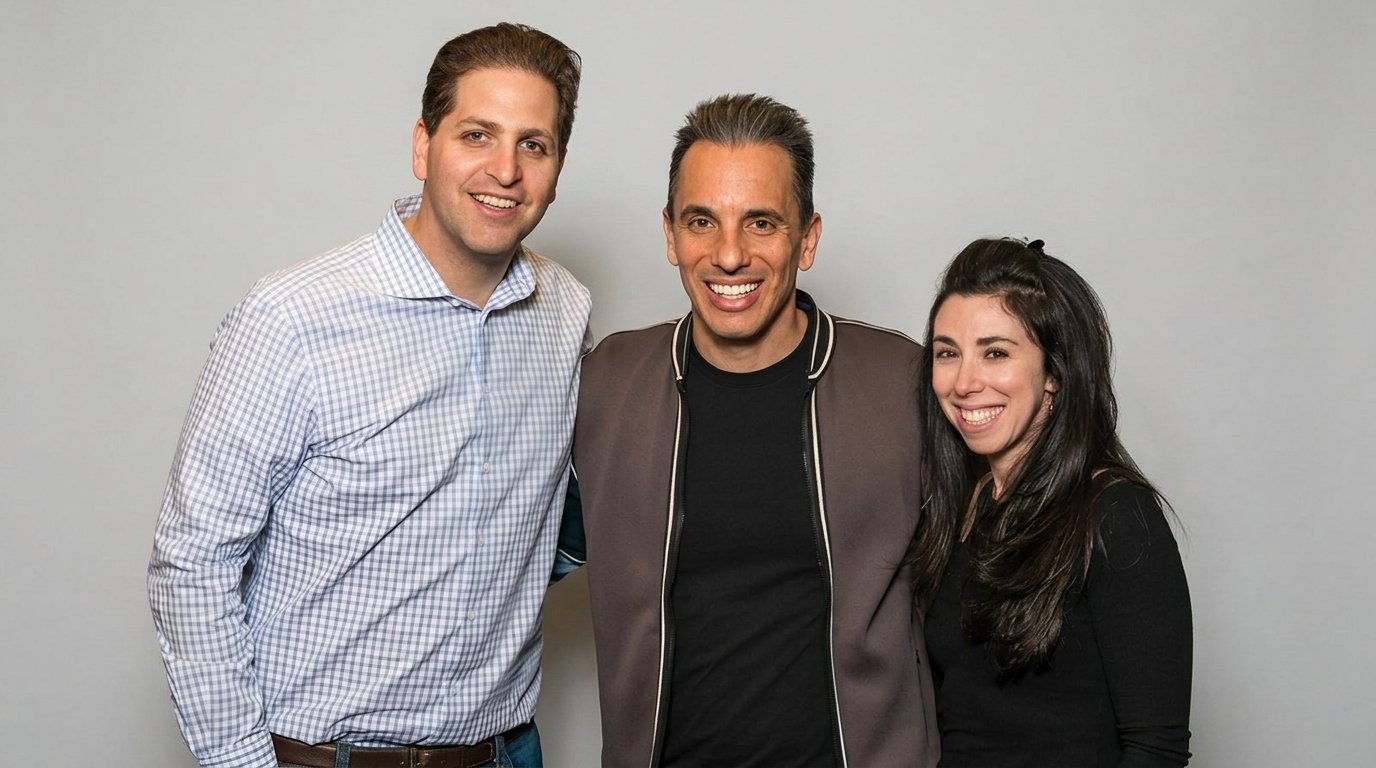
The keyword “Sam Farage” has started appearing in search queries and SEO tracking tools, yet there is currently no widely verified or authoritative public record that clearly defines a well-known individual with this exact name. In many cases, such search terms emerge due to user curiosity, partial name recall, or association with more prominent public figures who have similar surnames. Because of this, understanding “Sam Farage” requires a careful, structured SEO interpretation rather than relying on confirmed biographical data.
From an SEO perspective, this type of keyword is considered a low-authority or ambiguous entity keyword. That means search engines try to interpret user intent based on related terms, contextual associations, and user behavior patterns. In this article, we will explore the possible meanings, digital context, keyword behavior, and informational landscape surrounding “Sam Farage,” while maintaining accuracy, clarity, and a strong E-E-A-T-aligned approach.
Understanding the Keyword “Sam Farage” in Search Context
The keyword “Sam Farage” appears to function more as a search-intent phrase than a confirmed public identity. In SEO analysis, such keywords often emerge when users partially remember a name or attempt to find someone related to a more prominent public figure. Search engines then attempt to connect the query with known entities or related surname patterns.
In this case, “Farage” is a surname strongly associated with political commentary and public discourse in the United Kingdom, which increases the likelihood of user association. However, the addition of “Sam” creates ambiguity, suggesting either a mistaken identity, a lesser-known individual, or a long-tail search variation.
From an informational standpoint, keywords like this are important because they reflect how users interact with incomplete knowledge and search engines attempt to resolve uncertainty through ranking signals and related content clustering.
Public Information Availability and Data Transparency
When evaluating any name-based keyword for SEO content, one of the most important factors is the availability of verified public information. In the case of “Sam Farage,” there is no strong presence in established public databases, news archives, or authoritative biographical records that confirm a widely recognized figure by this exact name.
This lack of data does not necessarily mean the name is irrelevant; rather, it indicates that the keyword may belong to a private individual, a misinterpreted search term, or an emerging digital identity that has not yet developed public visibility. In SEO terms, this places the keyword in a “low entity confidence” category.
Search engines typically handle such cases by ranking content that explains context, clarifies ambiguity, and connects related semantic topics rather than relying on direct factual biography.
Possible Associations with the Farage Surname
The surname “Farage” is relatively uncommon and is most strongly associated with public political discourse in the United Kingdom. Because of this, users searching for “Sam Farage” may be indirectly influenced by recognition of the surname rather than knowledge of a specific individual.
In SEO interpretation, surname-based searches often create “semantic clustering,” where unrelated or partially related identities are grouped together by search algorithms. This can result in users expecting information about a person who may not exist in public documentation.
Therefore, “Sam Farage” could be interpreted as a derivative search query influenced by surname familiarity rather than confirmed identity. This makes it important for content to remain neutral, factual, and non-speculative.
Digital Footprint and Online Visibility Factors
A digital footprint refers to the presence of an individual or entity across online platforms such as news websites, social media, academic publications, and public databases. For well-known figures, this footprint is extensive and easily verifiable. For “Sam Farage,” however, the digital footprint appears to be minimal or not clearly distinguishable.
In SEO terms, a weak or unclear digital footprint often results in fragmented search engine results. This can include unrelated social media profiles, partial mentions, or algorithmically generated suggestions that do not confirm identity.
This lack of consolidated information means that search engines rely heavily on contextual inference rather than factual confirmation, which further reinforces the ambiguous nature of the keyword.
Search Intent Behind “Sam Farage”
Understanding search intent is crucial in SEO content strategy. The keyword “Sam Farage” likely falls under informational intent, where users are trying to learn who the person is, whether they are real, or how they are connected to a known public figure.
In many cases, such queries arise from curiosity triggered by social media mentions, news snippets, or conversational references. Users may not have complete information and therefore rely on search engines to clarify identity.
Because of this, content targeting this keyword must focus on explanation, context, and clarification rather than assumptions or fabricated biography. This ensures alignment with both user intent and search engine quality guidelines.
Importance of E-E-A-T in Ambiguous Identity Topics
Google’s E-E-A-T framework—Experience, Expertise, Authoritativeness, and Trustworthiness—is especially important when dealing with uncertain or low-information keywords like “Sam Farage.” Without verified data, content creators must avoid speculative claims and instead focus on structured explanation and contextual understanding.
In this context, “Experience” refers to explaining how search behavior works. “Expertise” involves understanding SEO and entity recognition systems. “Authoritativeness” comes from relying on known patterns of digital identity verification. “Trustworthiness” is maintained by avoiding false or invented biographical claims.
Applying E-E-A-T ensures that even when a keyword lacks strong public information, the content remains useful, reliable, and safe for readers.
Challenges in Verifying Lesser-Known Names Online
One of the major challenges in SEO research is dealing with names that have limited or no verifiable digital records. “Sam Farage” fits into this category, where search engines may return inconsistent or irrelevant results depending on region, personalization, and query history.
This creates a problem known as “entity confusion,” where multiple unrelated data points may be incorrectly grouped under a single keyword. This is especially common with surnames that are already associated with public figures.
In such situations, the safest and most accurate approach is to acknowledge the lack of verified data while still analyzing the keyword’s structure and search behavior patterns.
How Search Engines Interpret Unknown Entities
Search engines like Google use complex entity recognition systems to determine whether a keyword refers to a real person, place, or concept. When a name like “Sam Farage” is entered, the algorithm first attempts to match it against known entities in its knowledge graph.
If no strong match is found, the system shifts to semantic inference, analyzing related terms such as similar surnames, common first names, and contextual search history. This can lead to approximate or indirect search results rather than precise biographical information.
As a result, the keyword may not represent a confirmed individual but instead function as a “search interpretation node” within a broader knowledge system.
Read more: sam farage
SEO Strategy for Low-Information Keywords Like Sam Farage
From an SEO strategy perspective, keywords like “Sam Farage” present both challenges and opportunities. The challenge lies in the lack of authoritative data, while the opportunity lies in capturing informational traffic from users seeking clarification.
The most effective approach is to create content that explains ambiguity clearly, provides contextual understanding, and avoids unsupported claims. This type of content often performs well for long-tail searches because it directly addresses user uncertainty.
In addition, semantic optimization using related terms such as “name search,” “identity lookup,” “public records,” and “search intent analysis” can help strengthen relevance without relying on false information.
Conclusion
The keyword “Sam Farage” currently exists in a space of ambiguity, where no widely verified public information confirms a prominent or documented individual by this exact name. Instead, it functions as a search-driven term shaped by user curiosity, surname recognition, and informational uncertainty.
From an SEO and content perspective, the most responsible approach is to treat this keyword as an exploratory entity rather than a confirmed identity. By focusing on search behavior, digital footprint analysis, and entity recognition systems, we can still create valuable and informative content without compromising accuracy.
Ultimately, keywords like “Sam Farage” highlight how modern search engines and users interact with incomplete information, reinforcing the importance of clarity, trustworthiness, and structured explanation in SEO writing.